It was already Memorial Day weekend, yet New York still seemed reluctant to enter summer—perhaps for the third time this year. The weather was gray, rainy, and stuck in the low 60s. I walked across Central Park toward 505 West End Avenue, the address commonly listed as Rachmaninoff’s former residence. Along the way, the park paths were unusually quiet, and even the streets beyond felt subdued.
By the time I reached the Upper West Side, Manhattan no longer felt particularly urban. The neighborhood had the atmosphere of a quiet residential district, with tree-lined streets, prewar apartment buildings, and little traffic. Standing there, it was easy to understand why Rachmaninoff chose to live here during the final years of his life. Despite being in New York City, it offered a sense of calm that must have been increasingly rare elsewhere.
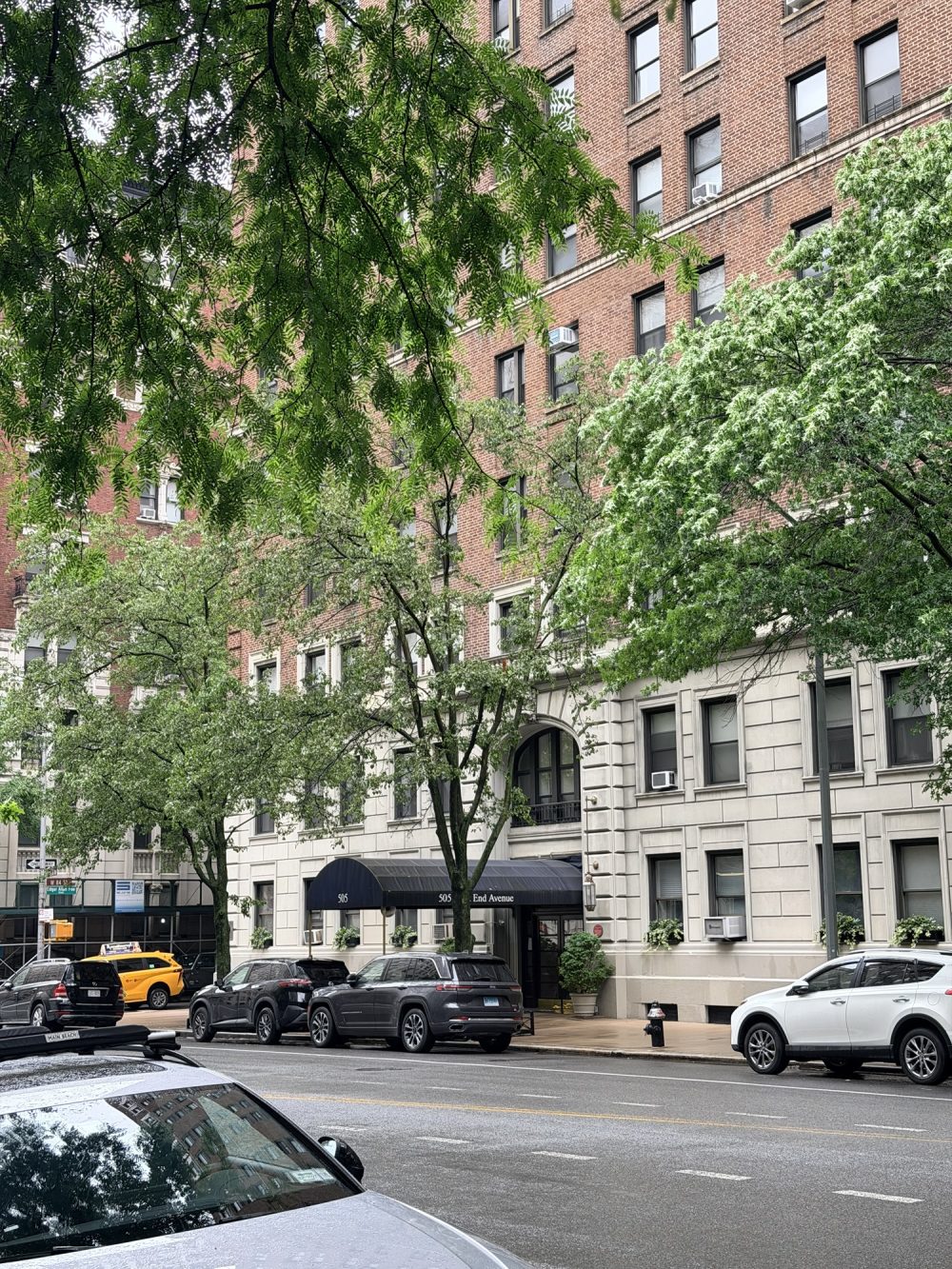
To be honest, I expected something more theatrical.
Instead, Rachmaninoff’s New York home sits quietly at the corner of West End Avenue and West 84th Street, almost anonymous unless you know exactly what you’re looking for. A modest plaque on the building notes that he spent the last seventeen years of his life here. Even easier to miss is a small red plaque near the entrance, partially hidden behind plants, commemorating the works he composed in this apartment: Rhapsody on a Theme of Paganini, Symphony No. 3, and Symphonic Dances. The understated nature of the place is surprising when one considers the music that emerged from it.
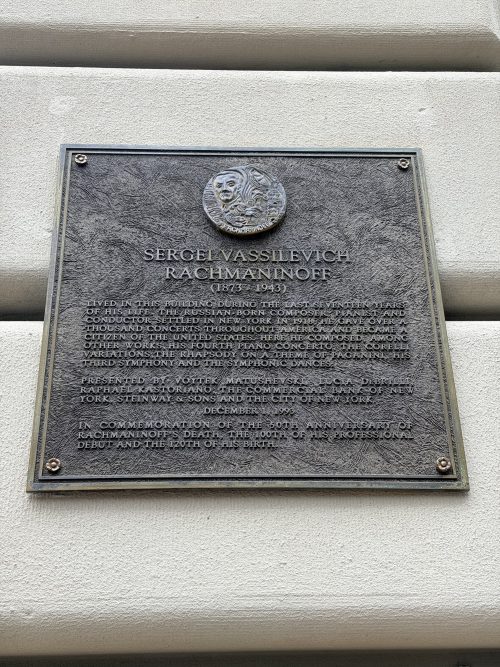
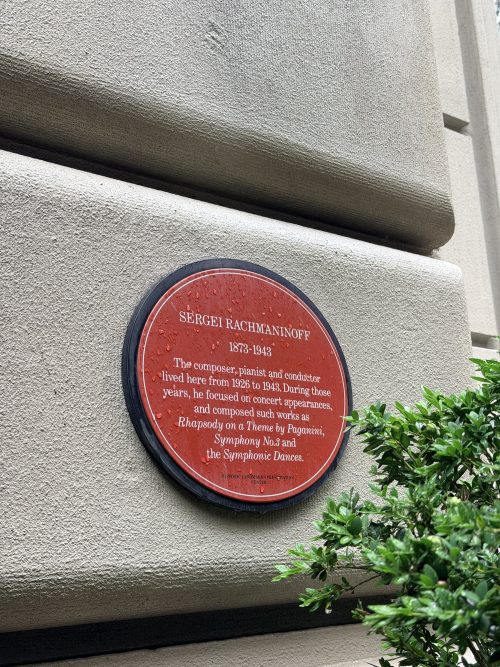
A block west of the building lies Riverside Park, opening onto wide views of the Hudson River. The atmosphere there feels worlds away from the stereotypical image of Manhattan. The noise fades. The streets widen. The river slows everything down. Looking out across the water, I could imagine why Rachmaninoff stayed.
What stayed with me, however, was not the plaque or the historical significance of the address, but how ordinary and livable it all felt.
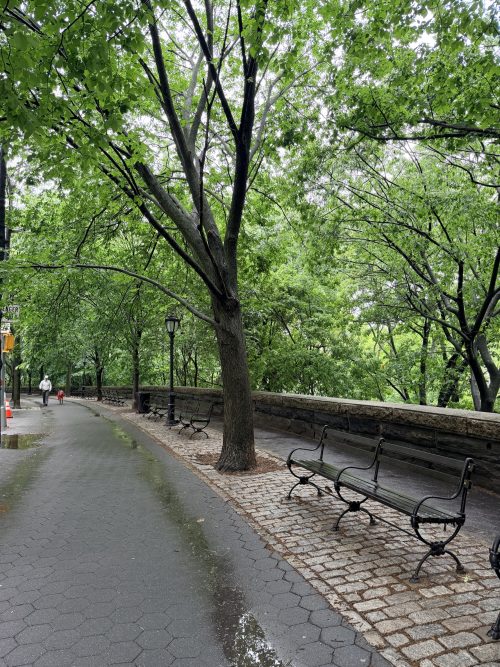
This was not a museum or a monument. It was simply a home. A place where someone came back after concerts and tours, practiced the piano, worked on new scores, looked out the window at changing seasons, and perhaps took quiet walks along the river. The building itself asks for little attention. Yet standing there, it felt strangely moving to realize that some of the last great works of one of the twentieth century’s most beloved composers were written not in some grand artistic sanctuary, but in an ordinary New York apartment overlooking the Hudson.
Perhaps the cold, rainy afternoon helped. Had it been a bright summer day, I might have walked away thinking only about the plaque. Instead, the gray weather seemed perfectly suited to a place that feels less like a landmark and more like a memory.
What lingered in my mind was not the plaque itself, but the idea of home.
Rachmaninoff spent much of his later life in motion. After leaving Russia in 1917, he moved across countries and continents, touring constantly and carrying with him a profound sense of loss for the world he had left behind. In many ways, he remained an exile for the rest of his life.
Yet standing on this quiet corner of the Upper West Side, it occurred to me that perhaps he found something resembling home here. Not a grand estate like Ivanovka, nor the Russia he never stopped missing, but a place where life settled into a rhythm: a piano, a study, familiar streets, walks by the Hudson, and years long enough for roots to grow.
The plaques commemorate the music he wrote here. What moved me more was the possibility that, after decades of displacement, this ordinary apartment may have offered him something even rarer—a place to belong.


Leave a comment